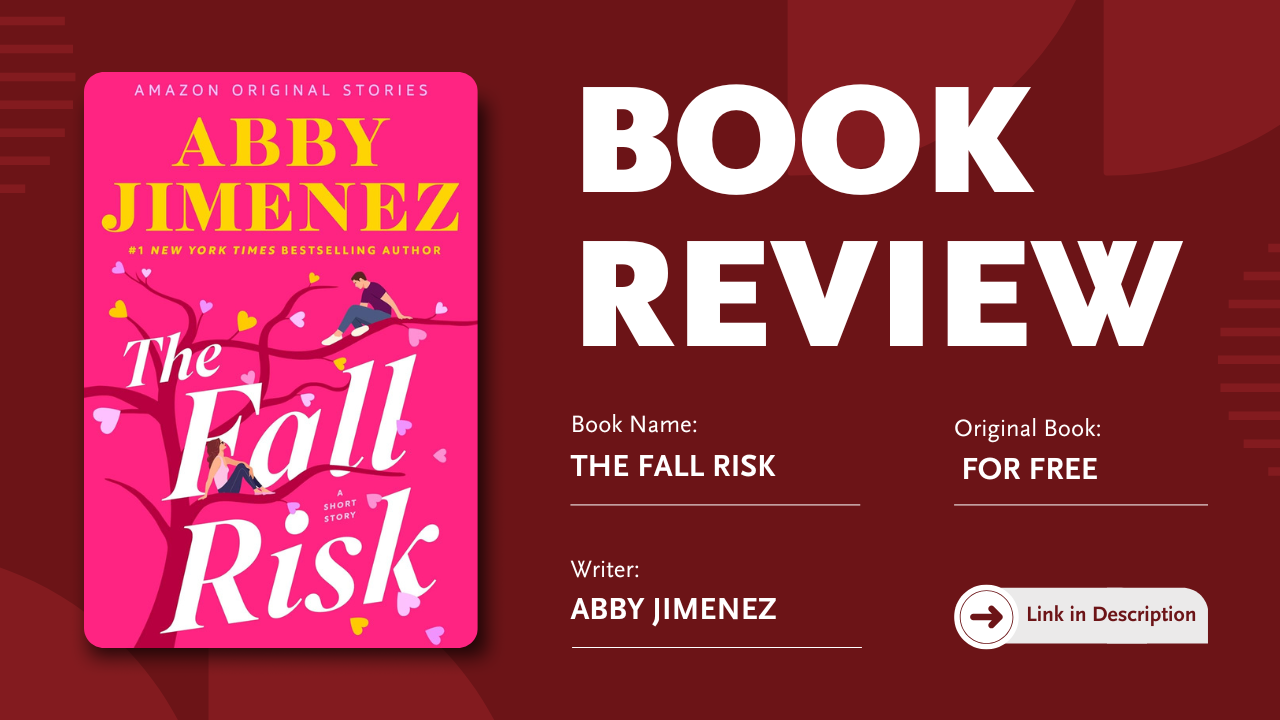

The Fall Risk: A Short Story by Abby Jimenez is a captivating narrative that delves into the intricate dance between vulnerability and resilience. Abby Jimenez, known for her poignant storytelling, crafts a tale that resonates deeply with readers, offering a window into the complexities of human emotions. In this exploration, I will guide you through the pivotal elements that make this story a compelling read.
Looking for a heartfelt short story that blends romance, emotional healing, and empowerment?
Abby Jimenez’s The Fall Risk: A Short Story delivers just that — a powerful narrative packed into under a hundred pages. Known for her wit and emotional depth in novels like Part of Your World and Yours Truly, Jimenez returns with another touching tale that explores love, trauma, and personal growth in unexpected circumstances.
In this Amazon Original short story, two neighbors find themselves literally trapped after a construction mishap removes the stairs to their second-floor apartments. What starts as an inconvenience quickly becomes an unforgettable weekend of laughter, vulnerability, and courage.
👉 Get your copy of The Fall Risk by Abby Jimenez on Amazon and experience a short but deeply moving romance that proves falling — in every sense — can sometimes lift you higher.
Book Summary: The Fall Risk
Author: Abby Jimenez
Published: March 1, 2025 ( Amazon Original Stories)
Length: ~82 pages / novella length
Premise & Setup
The Fall Risk opens with a quirky—but high-stakes—scenario: the stairs to two second-floor apartments have been accidentally removed in a construction error. Two neighbors, Seth and Charlotte, now find themselves stranded above ground level, unable to leave their units for the Valentine’s Day weekend.
Seth is an arborist, recently divorced, recovering from a foot injury caused by a falling branch. Charlotte works remotely as an accountant and carries emotional scars from being stalked for years by a man named George.  Because of her past, Charlotte is cautious, fearful, and heavily guarded when it comes to letting anyone into her inner world.
Thus, a strange and forced proximity begins: stuck between four walls, Seth and Charlotte slowly start interacting—first as curious neighbors, then as confidants, and ultimately as something more.

Image Source: Audible
Plot Progression & Key Moments
-
The Discovery & Lock-In The novel begins when Seth notices his apartment stairs are missing and sees them in a dumpster. He meets Charlotte, wonders about her presence and safety, and both realize they are stranded until the reconstruction can be done (not until Monday). A ladder is offered for emergencies, but they largely decide to stay put.
-
Shared Space, Shared Stories Over the course of the weekend, Seth and Charlotte push chairs onto their shared balcony/landing, bring up supplies, talk, laugh, and gradually peel back their defenses. Seth’s love for trees and nature becomes a bonding topic; Charlotte’s protective behaviors and fears emerge in their conversations.
-
Emotional Reveal & Conflict Charlotte reveals her long trauma with her stalker and her fear of returning to normal life. Seth shares his own emotional scars—his divorce and betrayal by his ex (who left him for her cousin).
-
Tension Escalates / External Pressures Their closeness is complicated by the fear of exposure: a video of their landing goes viral, exposing Charlotte’s address. Then George (the stalker) shows up. Charlotte must choose whether to run again or confront her fear.
-
Confrontation & Climax When George arrives, Charlotte steps into her power. With Seth’s support (but not as a passive savior), she defends herself—breaking his kneecaps with a baseball bat, then calling the police.
-
Resolution & Aftermath The stairs are replaced, but Charlotte decides to no longer flee. She kisses Seth and asks to go on a real public date first. She and Seth, along with supportive friends Izzy and Gabe, begin building a life together. Charlotte becomes an advocate for women’s safety and self-defense, reclaiming her identity.

Main Characters
harlotte — cautious, traumatized, but courageous. Her journey is one of reclaiming agency, trusting again, and transforming fear into strength.
Seth — kind, slightly wounded, empathetic. His willingness to be vulnerable and patient helps Charlotte open up.
George — the antagonist, representational of the dangers and terror of stalking.
Izzy & Gabe — Charlotte’s and Seth’s friends respectively, providing comic relief, support, and their own secondary romance subplot.
John (Property Manager) — the inadvertent instigator of the plot, who tries to fix the stair error but ends up enabling the relationship.
Themes & Motifs
-
Trauma, Fear & Healing One of the most central themes is how past trauma, especially in Charlotte’s life, shapes behavior and trust. The story examines what it means to heal gradually, and that recovery isn’t linear.
-
Trust, Vulnerability & Connection The novella insists that true connection emerges when two people allow themselves to be seen—flaws, fears, and all. Seth and Charlotte’s trust builds from small acts of caring, not grand gestures.
-
Empowerment & Agency Though romance is a key element, the story strongly affirms that Charlotte is not “rescued” by Seth; she rescues herself (with help). Her final confrontation is an act of ownership, not dependency.
-
Metaphors of Height & Roots Seth, as an arborist, frequently uses metaphors about trees, roots, and growth. These echo the underlying message: to fall (emotionally) is part of strength, as long as one has roots to hold onto.
-
Small Gestures & Community Even in a tight, forced scenario, the care shown by neighbors and friends (through lettuce dropped via buckets, painting parties, shared laughter) becomes vital. It underscores how community and small kindnesses can change lives.
Strengths & Critiques
What Works Well:
Fresh Set-Up / Forced Proximity Done Right: The premise is quirky yet plausible, giving the characters an intense space to connect.
Emotional Depth in Short Format: Jimenez does well in packing real stakes, heartfelt moments, and character growth into a compact form.
Voice & Humor: Witty banter, the use of tree puns, and character quirks keep the tone light even when dealing with darker subject matter.
Possible Weaknesses:
Pacing / Compression: Some readers feel the novella format causes certain developments to feel rushed or underexplored.
Heavy Themes in a Light Context: The stalking, mental health, and trauma elements are serious — some critics feel the short form doesn’t leave adequate space to fully address or resolve them.
Neat Resolutions: The ending is satisfying but arguably tidy; some may wish for more ambiguity or complexity.
Why Read The Fall Risk?
- If you enjoy romance with real stakes (not just fluff), this novella delivers emotional weight.
- It’s a fast read—ideal for a weekend or a single sitting—but with resonance that lingers.
- The story affirms personal strength and agency in addition to romantic connection.
- Jimenez’s ability to blend humor, heartbreak, and vulnerability shines even in a short work.
Chapter-by-Chapter Summary
Chapter 1: The Missing Stairs
The story opens with Seth, an arborist recovering from a work injury, waking to find the stairs to his second-floor apartment gone. Stranded and confused, he soon discovers his neighbor, Charlotte, is stuck too. While Seth is friendly and talkative, Charlotte remains withdrawn, setting the stage for their forced proximity.
Chapter 2: Strangers on the Landing
Charlotte works remotely and avoids social interaction. Seth’s attempts to connect are initially met with resistance, but their shared predicament slowly breaks the ice. Both begin to interact from their doorways, marking the start of a tentative friendship.
Chapter 3: Seeds of Trust
A storm forces more contact between the two, and Charlotte reluctantly lets Seth help secure her window. Their conversations turn more personal, hinting at past pain on both sides. Charlotte’s laughter — rare and genuine — signals the beginning of trust.
Chapter 4: Ghosts from the Past
We learn about Charlotte’s trauma — years of being stalked by a man named George. Her life of fear and isolation explains her guarded behavior. Seth’s patience and empathy make it easier for her to open up, deepening their connection.
Chapter 5: Building Bridges
Seth uses a makeshift pulley system to share food and coffee with Charlotte. Over lighthearted conversation, she finally reveals her full story. Seth’s reaction — quiet understanding rather than pity — helps her reclaim a small sense of control. Their chemistry grows as they realize how much they have in common.
Chapter 6: Going Viral
A viral social media video of the two stranded neighbors turns Charlotte’s world upside down. Her identity and location risk exposure, reigniting her worst fear — that George might find her again. Despite Seth’s reassurance, she begins planning to run.
Chapter 7: The Fall Risk
The stalker returns. George tracks her down and breaks into her apartment. But this time, Charlotte doesn’t freeze — she fights back. Using a baseball bat, she defends herself until police arrive. The emotional climax marks her transformation from fearful survivor to empowered woman.
Chapter 8: The Morning After
With George arrested, Charlotte chooses to stay rather than flee. Sitting beside Seth on the newly rebuilt stairs, she finally feels safe. They share a kiss and agree to take things slow — this time, Charlotte’s fall feels more like flight.
Symbolism and Metaphors in Abby Jimenez’s Writing
Abby Jimenez’s use of symbolism and metaphors in “The Fall Risk” is both subtle and powerful, enhancing the narrative and inviting readers to explore deeper meanings within the story. These literary devices are seamlessly woven into the fabric of the narrative, enriching the reading experience.
Symbolism: Jimenez employs symbolism to convey complex ideas and emotions, allowing readers to engage with the story on multiple levels. Common symbols, such as natural elements or everyday objects, are imbued with deeper significance, reflecting the characters’ inner journeys and the themes of the story.
Metaphors: Metaphors are a hallmark of Jimenez’s writing, adding layers of meaning to her prose. Her use of metaphorical language creates vivid imagery, helping to convey the emotional depth of the characters’ experiences. These metaphors often serve as a bridge between the characters’ internal worlds and the external events of the story.
Interpretation: The use of symbolism and metaphors invites readers to interpret the story in their own unique ways. This open-ended approach encourages engagement and reflection, allowing each reader to derive personal meaning from the narrative.
Through her adept use of symbolism and metaphors, Jimenez elevates “The Fall Risk” from a simple story to a rich tapestry of meaning and emotion.
Reader Reactions and Interpretations
“The Fall Risk” has elicited a wide range of reactions from readers, each bringing their own perspectives and interpretations to the story. This diversity of responses highlights the universal appeal and depth of Jimenez’s writing.
Many readers have praised the story for its authentic portrayal of vulnerability and resilience, noting how these themes resonated with their own experiences. The characters’ journeys of self-discovery and growth have inspired readers to reflect on their own lives, leading to introspection and personal insights.
In discussions and reviews, readers have also explored the symbolism and metaphors in the story, offering varied interpretations of the narrative’s deeper meanings. This engagement with the text demonstrates the richness of Jimenez’s storytelling, which encourages readers to think critically and explore the nuances of the narrative.
The wide range of reader reactions underscores the impact of “The Fall Risk” as a piece of contemporary literature, inviting ongoing conversation and exploration long after the final page is turned.
Comparisons to Other Works by Abby Jimenez
Abby Jimenez’s body of work is characterized by its emotional depth and relatable characters, and “The Fall Risk” is no exception. When compared to her other works, this story stands out for its exploration of vulnerability and resilience, themes that are common threads throughout her writing.
Recurring Themes: Jimenez often explores themes of love, loss, and personal growth in her stories. “The Fall Risk” shares these themes with her other works, but its focus on the balance between vulnerability and resilience sets it apart. This exploration of emotional complexity adds a unique dimension to the narrative.
Character Development: Jimenez’s characters are consistently well-developed and multidimensional, a hallmark of her writing style. In “The Fall Risk,” this character depth is particularly pronounced, with each figure contributing to the narrative’s exploration of human emotions and relationships.
Narrative Style: Jimenez’s narrative style, characterized by its emotional resonance and engaging prose, is evident in “The Fall Risk” and her other works. Her ability to create immersive stories that draw readers in is a testament to her skill as a storyteller.
Comparing “The Fall Risk” to Jimenez’s other works, readers can gain a deeper appreciation for her unique storytelling approach and the themes that define her literary career.
The Impact of “The Fall Risk” on Contemporary Literature
“The Fall Risk” has made a significant impact on contemporary literature, contributing to ongoing conversations about vulnerability, resilience, and the human experience. Jimenez’s exploration of these themes resonates with readers and writers alike, influencing the way stories are told and experienced.
Cultural Relevance: The themes of vulnerability and resilience are particularly relevant in today’s cultural climate, where conversations about mental health and emotional well-being are increasingly prominent. “The Fall Risk” contributes to these discussions by offering a narrative that encourages empathy and understanding.
Literary Influence: Jimenez’s storytelling style, characterized by its emotional depth and relatable characters, has set a standard for contemporary literature. Her ability to craft narratives that resonate with a wide audience has inspired other writers to explore similar themes in their own work.
Reader Engagement: The impact of “The Fall Risk” extends beyond the literary world, as readers engage with the story on a personal level. The narrative’s exploration of universal themes invites introspection and dialogue, fostering a sense of connection and community among readers.
Through its exploration of vulnerability and resilience, “The Fall Risk” has left a lasting mark on contemporary literature, influencing the way stories are told and experienced.
Lessons from “The Fall Risk”
In conclusion, “The Fall Risk: A Short Story by Abby Jimenez” offers valuable lessons about vulnerability, resilience, and the complexities of the human experience. Through her masterful storytelling, Jimenez invites readers to explore these themes in their own lives, encouraging introspection and personal growth.
The story serves as a reminder that vulnerability is not a weakness but a strength, and that resilience is a skill that can be cultivated over time. By embracing these qualities, we can navigate life’s challenges with courage and grace, ultimately emerging stronger and more self-aware.
As I reflect on “The Fall Risk,” I am reminded of the power of storytelling to illuminate the human experience and foster connection. I encourage you to read this captivating story and explore the themes that resonate with you. By engaging with the narrative, you may discover new insights about yourself and the world around you.
Conclusion
Abby Jimenez’s The Fall Risk is a small book with a big heart — a story of courage, connection, and second chances. It’s perfect for readers who love emotional depth, witty banter, and stories of personal empowerment.
Jimenez manages to explore trauma, healing, and romance in a compact, hopeful narrative that will stay with you long after the final page. Whether you’re already a fan of her novels or new to her writing, this short story showcases her signature balance of humor and heart.